
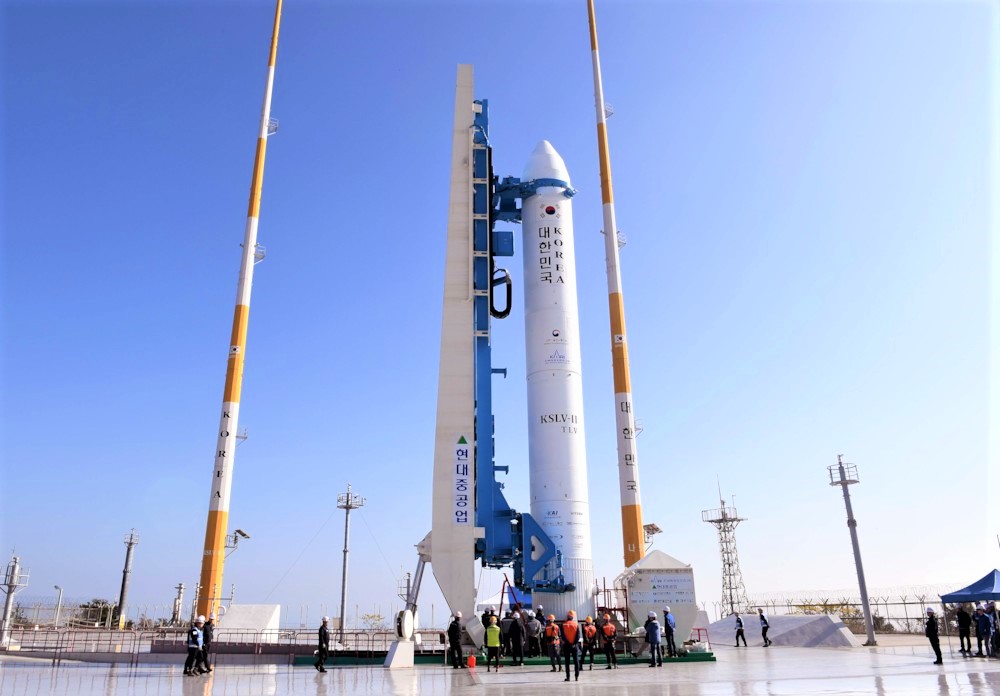
South Korea Nuri rocket has successfully sent 15 satellites into orbit, achieving an impressive 80% success rate. This milestone marks a significant advancement in the country’s space program.
Overview of South Korea’s Nuri Rocket
The South Korea Nuri rocket has made significant strides in its recent launch activities, showcasing the nation’s growing capabilities in space technology. Following its latest mission, the Nuri rocket successfully deployed 15 satellites into orbit, marking a pivotal achievement for the country. This accomplishment highlights a success rate of approximately 80%, positioning South Korea as a formidable player in the global aerospace industry.
Developed by the Korea Aerospace Research Institute (KARI), the Nuri rocket is designed to carry payloads into low Earth orbit. The program aims to enhance South Korea’s satellite launch capabilities and reduce reliance on foreign launch services.
As the nation continues to invest in its space exploration initiatives, the Nuri rocket represents a significant milestone in the journey towards establishing a robust space infrastructure.
Recent Launch Details
In a significant milestone for South Korea’s space ambitions, the Nuri rocket successfully launched on its latest mission, deploying 15 satellites into orbit. This launch marks a crucial step in demonstrating the capabilities of the Nuri rocket, which aims to enhance the nation’s position in the global aerospace sector.
The mission, which took place earlier this month, has been hailed as a remarkable achievement, showcasing an 80% success rate over its previous attempts. The deployment of multiple satellites is seen as a testament to the rocket’s reliability and performance.
- The Nuri rocket is designed to carry payloads of up to 1.5 tons.
- This launch included satellites for communication, Earth observation, and technology demonstration.
- Officials expressed optimism about future missions and advancing space exploration.
As the Nuri rocket continues to evolve, it positions South Korea as a competitive player in the international space arena.
Significance of 80% Success Rate
The achievement of an 80% success rate for South Korea’s Nuri rocket marks a significant milestone in the country’s aerospace ambitions. This rate not only highlights the reliability of the Nuri rocket but also reinforces South Korea’s position as a growing player in the global space race.
With its latest launch successfully deploying 15 satellites, the Nuri rocket demonstrates the potential for future commercial ventures and technology advancements. The implications of this success are multifaceted, including:
- Boosting national pride and inspiring further investment in space exploration.
- Encouraging international collaborations with other space-faring nations.
- Opening new opportunities for satellite deployment and research initiatives.
As South Korea continues to refine the Nuri rocket, the prospects for further enhancements and more ambitious missions loom large.
Challenges Faced by Nuri Rocket
The South Korea Nuri rocket has faced several challenges throughout its development and launch phases. These hurdles have tested the resilience of the nation’s space program, yet have also provided valuable learning experiences for engineers and scientists.
Key challenges include:
- Technical Difficulties: Initial launches experienced issues with fuel systems and navigation, necessitating extensive testing and revisions.
- Budget Constraints: Financial limitations have impacted the scope of research and development, requiring prioritization of certain projects over others.
- International Competition: Competing with well-established space agencies has pushed South Korea to innovate rapidly and improve its technologies.
- Public Expectations: High expectations from the government and public create pressure to succeed, making every launch a high-stakes event.
Despite these challenges, the Nuri rocket’s progress shows promise for future advancements in South Korea’s aerospace endeavors.
Future Plans for South Korean Space Missions
As South Korea continues to make strides in its space exploration efforts, future plans for South Korean space missions are becoming increasingly ambitious. The recent success of the Nuri rocket, which achieved an 80% success rate, has paved the way for more complex missions.
Key future initiatives include:
- Expansion of satellite launches: South Korea aims to send more satellites into orbit, enhancing its capabilities in communications, Earth observation, and scientific research.
- Development of a lunar lander: Plans are underway to develop a lunar lander, with the ambition of conducting a soft landing on the Moon by the mid-2020s.
- International collaboration: South Korea seeks partnerships with other nations and space agencies to share technology and expertise, further boosting its space program.
These initiatives demonstrate the country’s commitment to becoming a significant player in the global space industry.
Comparing Nuri with Global Rockets
As South Korea’s Nuri rocket embarks on its journey to prominence, comparisons with other global launch vehicles become inevitable. The Nuri rocket, with its recent success in deploying 15 satellites, reflects a growing capability among nations to achieve significant milestones in space exploration.
When evaluating the Nuri rocket against established players like SpaceX’s Falcon 9 and Russia’s Soyuz, several factors come into play:
- Cost Efficiency: Nuri’s development has focused on reducing costs while maintaining reliability.
- Payload Capacity: While the Nuri rocket has a modest payload capacity compared to its competitors, its recent success demonstrates potential for future enhancements.
- Technological Innovation: Nuri incorporates unique technologies that may offer advantages in future missions.
In conclusion, as the South Korea Nuri rocket solidifies its place in the global arena, it showcases a promising future for the nation’s ambitious space endeavors.
Public Reaction to Nuri’s Success
The successful launch of South Korea’s Nuri rocket has sparked considerable excitement among the public and experts alike. Many South Koreans have taken to social media to express their pride in the nation’s achievements in space technology.
Comments highlight a sense of optimism, with one user stating, “This is just the beginning for South Korea’s space ambitions!” Enthusiasts believe that the Nuri rocket’s performance could pave the way for greater investments in research and development.
However, not all reactions have been entirely positive. Some critics emphasize the need for continued improvement in reliability and performance, urging officials to address existing challenges.
- Positive Sentiments: Many celebrate the achievement as a milestone.
- Calls for Improvement: Critics urge focus on reliability.
Overall, the enthusiastic public reaction underscores a growing interest in South Korea’s future in space exploration.
The South Korea Nuri rocket has demonstrated impressive capabilities in its recent launches, sparking discussions about its potential in the global space race. As experts analyze its performance, the South Korea Nuri rocket may pave the way for future advancements in space exploration.
By Kiyoen569 via Openverse
Read the original
You might also like
Nuri rocket satellites: Proven success in deploying 15 units · Amazon Great Indian Festival: Best Deals on Appliances Revealed · OriginOS 7 features: What’s the best new addition?