
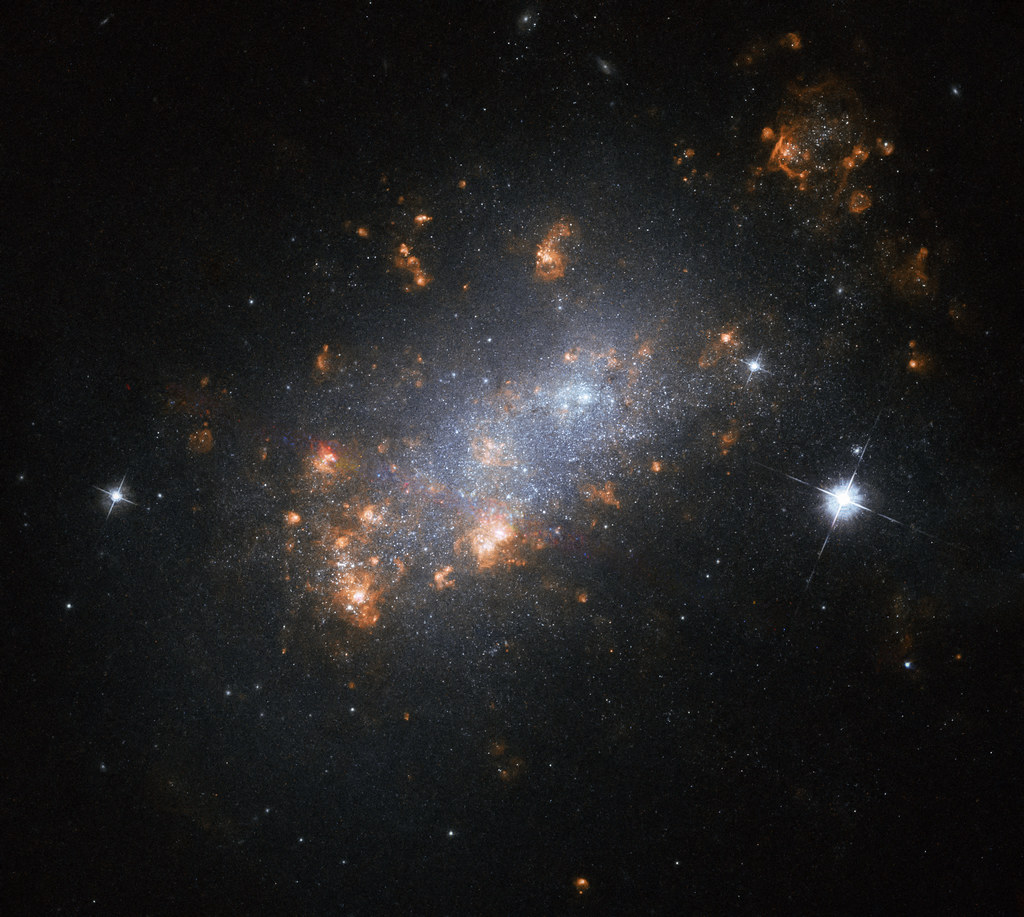
The odds of life in universe have intrigued scientists and enthusiasts alike. Recent studies and theories shed light on this captivating question.
Understanding the Odds of Life in the Universe
The question of the odds of life in the universe has fascinated scientists and astronomers for decades. As we explore the cosmos, we are left to ponder whether we are truly alone or part of a broader tapestry of life.
Several theories attempt to quantify these odds, drawing from various fields such as astrobiology, chemistry, and physics. Some scientists argue that the vastness of the universe, with its billions of galaxies and countless stars, significantly increases the probability of extraterrestrial life. According to the Drake Equation, which estimates the number of active, communicative extraterrestrial civilizations in the Milky Way galaxy, even a few planets with the right conditions could lead to a thriving ecosystem of alien life.
Another perspective comes from the Fermi Paradox, which questions why, given the high probability of life, we have not yet encountered any evidence of it. This paradox highlights the complexity of defining life and the challenges of detecting it across vast distances.
In addition to these theories, researchers continue to discover extremophiles on Earth—organisms that thrive in extreme conditions—which suggests that life may exist in environments previously thought to be inhospitable. Thus, understanding the odds of life in the universe remains an evolving field, shaped by new discoveries and technological advancements.
Recent Discoveries in Astrobiology
Recent discoveries in astrobiology have significantly advanced our understanding of the odds of life in the universe. Scientists have been unraveling the complexities of how life might exist beyond Earth, focusing on various celestial bodies within our solar system and beyond.
One of the most promising areas of research has been the exploration of Mars. Recent missions have uncovered evidence of ancient water flows and organic molecules, suggesting that microbial life may have existed on the planet. Moreover, the presence of subsurface ice raises intriguing possibilities for current life forms.
In addition to Mars, the icy moons of Jupiter and Saturn, such as Europa and Enceladus, are being studied for their potential to harbor life. These moons possess vast oceans beneath their icy crusts, creating environments that could sustain life as we know it—or even forms of life that we have yet to imagine.
Exoplanet research has also surged, with thousands of planets identified outside our solar system. The discovery of Earth-like planets in the habitable zone of their stars has reinforced the notion that the odds of life in the universe may be more favorable than previously thought. Astronomers continue to refine methods for detecting biosignatures, which could provide direct evidence of life.
As these discoveries unfold, they not only enhance our understanding of life’s odds but also spark profound philosophical questions about humanity’s role in the cosmos.
The Search for Extraterrestrial Signals
The quest to determine the odds of life in the universe has led scientists to explore various methods of communication beyond our planet. One of the most intriguing approaches has been the search for extraterrestrial signals, which aims to detect any signs of intelligent life in the cosmos.
Researchers utilize advanced technology to listen for radio waves and other forms of electromagnetic signals that may originate from alien civilizations. This search has been formalized through projects like the Search for Extraterrestrial Intelligence (SETI), which employs large radio telescopes to scan the skies.
The concept of sending messages into space has also gained traction, with initiatives such as the Messaging Extraterrestrial Intelligence (METI). These efforts involve transmitting information about humanity, our planet, and our scientific achievements in hopes of establishing contact. However, the debate continues on whether such actions are wise, as they may expose us to unknown risks.
Despite the challenges, the pursuit of extraterrestrial signals remains a focal point in understanding the odds of life in the universe. Each detected signal, even if it turns out to be a natural phenomenon, adds to our knowledge and fuels the ongoing discussion about our place in the vast cosmos. As technology advances, the possibility of uncovering a genuine extraterrestrial message becomes increasingly tantalizing.
What Scientists Are Saying About Life Beyond Earth
As discussions around the odds of life in the universe continue to captivate scientists and enthusiasts alike, many experts are weighing in on the likelihood of finding extraterrestrial life. Dr. Jane Holloway, an astrobiologist, argues that the vastness of the universe makes it statistically improbable for Earth to be the only planet harboring life. She states, “With billions of galaxies, each containing millions of stars, the potential for habitable planets is enormous.”
Moreover, Dr. Samir Patel emphasizes the importance of understanding extremophiles—organisms that thrive in extreme conditions on Earth. He suggests that these organisms could serve as a model for potential life forms elsewhere, particularly in environments previously deemed inhospitable. “If life can exist in the deep sea or inside volcanoes, why not on planets with harsh climates?” he questions.
In addition to these insights, the ongoing search for exoplanets has revealed many candidates within the habitable zones of their stars. The Kepler Space Telescope, for instance, has identified thousands of such planets, fueling optimism regarding the odds of life in the universe. “We’re just at the beginning of understanding what lies out there,” notes Dr. Angela Reyes, an astrophysicist, highlighting the significance of continued exploration and research in astrobiology.
The Role of Technology in Space Exploration
As technology continues to advance, its role in space exploration has become increasingly significant in the quest to determine the odds of life in the universe. Innovations in various fields enable scientists to gather more data and make informed hypotheses about the potential for extraterrestrial life.
One of the most impactful advancements is the development of powerful telescopes, which allow researchers to observe distant exoplanets and analyze their atmospheres for signs of habitability. These telescopes can detect the presence of water vapor, methane, and other critical elements that suggest life may exist.
In addition to telescopic advancements, robotic missions to other planets and moons have provided invaluable insights. Notable missions include:
- Mars Rovers: Equipped with sophisticated instruments capable of analyzing soil and rock samples, these rovers search for microbial life.
- Europa Clipper: Planned to explore Jupiter’s moon Europa, this mission aims to study its icy surface, which may harbor an ocean beneath.
- James Webb Space Telescope: Set to revolutionize our understanding of the universe, it will help identify potentially habitable planets and analyze their atmospheres.
Moreover, advancements in artificial intelligence are enhancing our ability to process vast amounts of data gathered from space, allowing for more effective analysis of potential signals from extraterrestrial civilizations.
Future Missions to Explore Other Planets
As scientists continue to grapple with the odds of life in the universe, future missions to explore other planets are set to play a crucial role in expanding our understanding of extraterrestrial possibilities. These missions aim to gather more data and provide clearer insights into the conditions that may support life beyond Earth.
Several ambitious projects are currently in the planning stages or underway, including:
- NASA’s Artemis Program: Aiming to return humans to the Moon, this program will pave the way for future missions to Mars and beyond.
- James Webb Space Telescope: Launched in late 2021, this telescope is designed to observe distant exoplanets and analyze their atmospheres for signs of habitability.
- Europa Clipper: Slated for launch in the 2020s, this mission will investigate Jupiter’s moon Europa, which is believed to harbor a subsurface ocean that could potentially support life.
- Mars Sample Return Mission: A collaboration between NASA and ESA, this mission aims to bring back samples from Mars to study the planet’s geology and search for signs of past life.
By focusing on these and other upcoming missions, researchers hope to refine the odds of life in the universe and uncover new worlds where life could exist, reshaping our understanding of our place in the cosmos.
Many scientists are exploring the odds of life in universe by examining extremophiles on Earth, which thrive in conditions previously thought to be uninhabitable. These discoveries have led to new theories about the odds of life in universe existing in diverse environments across distant planets.
By europeanspaceagency via Openverse