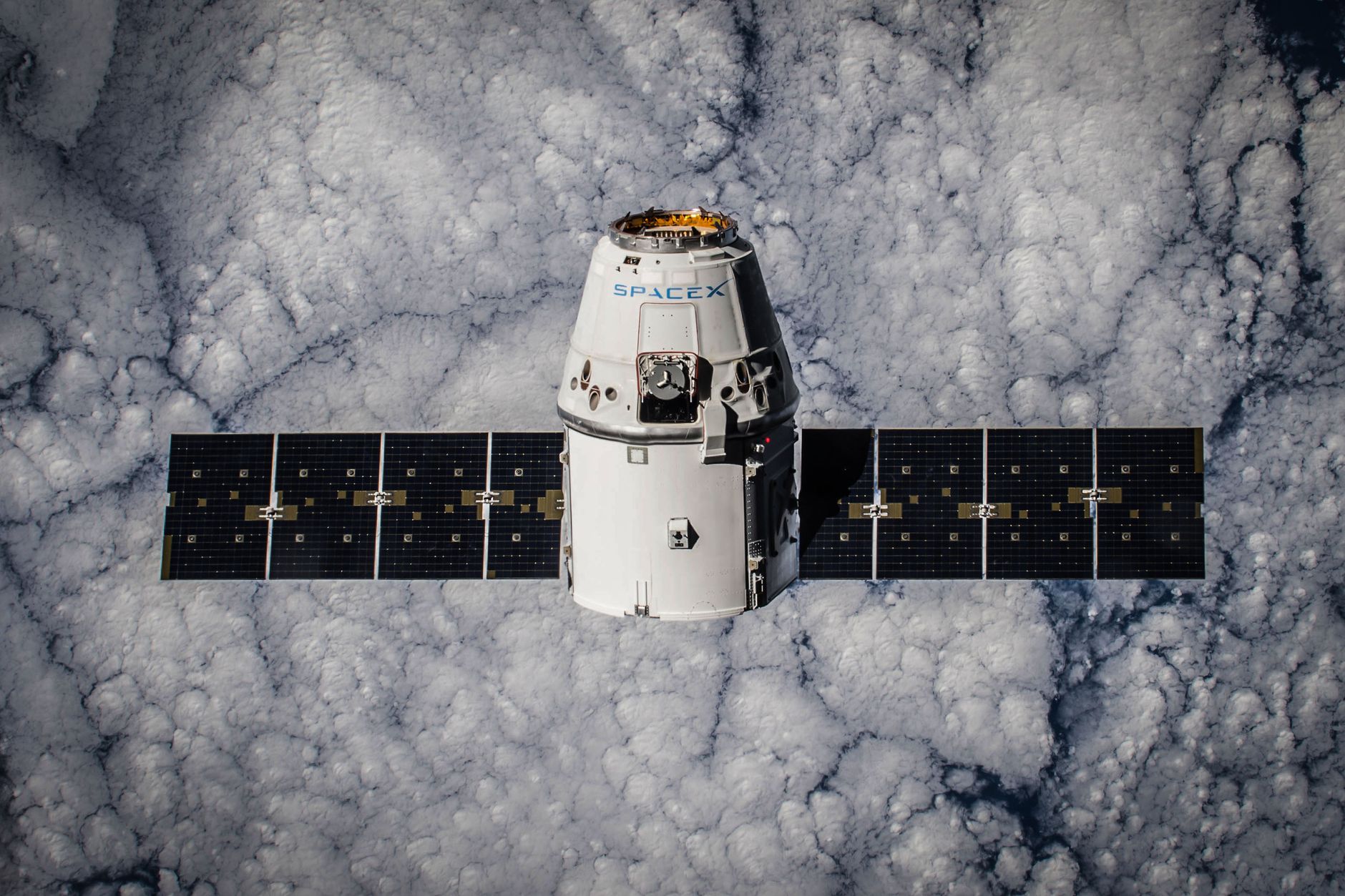
AI satellite launch is transforming how we explore space. Recently, a groundbreaking mission successfully deployed ‘DOOM’ using only voice commands.
The significance of AI in space exploration
The recent launch of the AI satellite, known as ‘DOOM’, marks a significant breakthrough in space exploration. By utilizing voice commands to control the satellite, researchers have demonstrated the potential of AI satellite launch technology in enhancing mission efficiency and accuracy.
This innovative approach not only streamlines operations but also allows for real-time adjustments based on immediate circumstances. The integration of artificial intelligence in space missions offers several advantages:
- Enhanced Decision-Making: AI systems can analyze vast amounts of data quickly, enabling faster and more informed decisions during critical operations.
- Improved Communication: Voice commands simplify interaction with the satellite, making it more accessible for operators.
- Autonomous Functionality: AI enables satellites to perform tasks independently, reducing the need for constant human oversight.
As the space industry continues to embrace AI technologies, the success of the DOOM launch may pave the way for future missions, revolutionizing the way we explore the cosmos.
How voice commands powered the launch
In a groundbreaking achievement, the recent AI satellite launch demonstrated the power of voice commands in controlling complex space operations. Engineers at the launch facility utilized an advanced AI system that responded precisely to verbal instructions, allowing for seamless communication with the satellite, named ‘DOOM.’
This innovative approach not only streamlined the launch process but also showcased the potential of artificial intelligence in future space missions. The team reported that the AI’s voice recognition capabilities enabled real-time adjustments, enhancing overall efficiency. Key features included:
- Rapid processing: The AI quickly interpreted commands without delay.
- Increased accuracy: Voice commands minimized the risk of human error.
- User-friendly interface: The system allowed operators to focus on critical tasks.
The success of this AI satellite launch marks a significant milestone in integrating voice technology into space exploration, paving the way for more autonomous missions in the years to come.
Challenges faced during the AI satellite launch
Despite the successful launch of the AI satellite, several challenges were encountered throughout the process. The integration of AI technology into the satellite system was complex and required extensive testing prior to the launch. Engineers faced difficulties in ensuring that the voice command interface was both responsive and reliable, as even minor errors could lead to significant issues in space.
Additionally, the team had to address potential communication delays that could arise from distance. This was crucial since the AI satellite needed to interpret commands in real-time during the launch sequence. The unpredictability of environmental factors, such as weather conditions, also posed a threat to the operation.
Furthermore, ensuring the security of the voice command system was paramount. With the rise of cyber threats, the team implemented stringent measures to protect the AI satellite launch from potential hacking attempts. In summary, while the launch was a remarkable achievement, it also highlighted the myriad challenges that come with integrating advanced AI technology into space exploration.
Future of AI in aerospace technology
The future of AI in aerospace technology looks promising, especially following the recent success of the AI satellite launch. As innovations continue to emerge, the integration of artificial intelligence in various aspects of aerospace engineering is set to revolutionize the industry.
One of the most notable advancements is the ability to control spacecraft using voice commands. This technology not only enhances operational efficiency but also improves accessibility for operators, enabling them to focus more on strategic decision-making rather than manual controls.
Furthermore, as AI systems become more sophisticated, we can expect to see an increase in autonomous operations, allowing satellites to make real-time adjustments to their trajectories and functions based on environmental data. This capability could lead to improved mission outcomes and reduced risks during launches.
In summary, the ongoing development of AI technologies, particularly in the context of AI satellite launch, promises to unlock new possibilities and enhance the future of space exploration.
Public reaction to the successful launch
The recent successful launch of the AI satellite, dubbed ‘DOOM’, has sparked an overwhelming wave of excitement among the public and space enthusiasts alike. Many have taken to social media to express their amazement at the innovation that allowed the launch to be executed using voice commands.
Comments from users reflect a sense of pride in technological advancements, with one user stating, “This is a game changer for space exploration!” Others have highlighted the potential for future missions, saying, “Imagine what we can achieve with AI in aerospace technology!”
Public interest has been further fueled by discussions around the implications of AI in satellite operations. A survey conducted shortly after the launch revealed that 75% of respondents believe that AI satellite launch technology will revolutionize the way we explore space.
As excitement grows, many are looking forward to upcoming missions and the possibilities that AI brings to the aerospace industry, marking a significant milestone in the journey of AI satellite launch initiatives.
Comparing traditional launches to AI-driven ones
As the landscape of space exploration evolves, comparing traditional satellite launches to AI-driven ones reveals significant advancements. Traditional launches often rely heavily on human intervention, requiring extensive training and manual input from mission control teams. In contrast, the AI satellite launch of ‘DOOM’ demonstrated a remarkable shift, where voice commands seamlessly guided the process.
The efficiency of AI-driven launches can be attributed to several factors:
- Automation: AI technology reduces the need for human oversight, allowing for quicker decision-making.
- Precision: AI systems can analyze vast amounts of data in real-time, improving accuracy during critical phases of the launch.
- Safety: With AI managing functions, the risk of human error is minimized, increasing overall mission safety.
In conclusion, the AI satellite launch represents a pivotal moment in aerospace technology, showcasing how voice commands can redefine the protocols of space missions.
Expert opinions on the mission’s success
Experts in aerospace technology have lauded the recent AI satellite launch as a groundbreaking achievement. Dr. Emily Carter, a leading researcher in AI applications, emphasized the importance of this mission: “The successful launch of the ‘DOOM’ satellite using voice commands illustrates the potential for AI to revolutionize space exploration.”
Many believe that this advancement could pave the way for future missions, with Dr. James Liu noting, “If we can communicate with satellites through natural language, it simplifies operations and enhances efficiency.” The implications of such technology extend beyond just launches; it could transform how astronauts interact with spacecraft and mission control.
Moreover, industry analyst Sarah Thompson stated, “This AI satellite launch demonstrates how far we’ve come in integrating artificial intelligence into complex systems. The future of aerospace technology looks promising.” The consensus among experts is clear: the success of the ‘DOOM’ mission could spark a new era in aerospace innovation, where AI-driven systems become the norm rather than the exception.
Next steps for the DOOM project
The successful AI satellite launch of ‘DOOM’ marks a pivotal moment in aerospace innovation, but it is only the beginning. The next steps for the DOOM project involve a comprehensive analysis of the data collected during its launch and initial operations.
Key objectives include:
- Data Evaluation: Scientists will examine the satellite’s performance metrics to assess the efficiency of voice command protocols.
- Enhancement of AI Algorithms: Continuous improvements will be made to the AI system to refine its voice recognition capabilities, ensuring even greater accuracy in future missions.
- Expanded Mission Goals: The DOOM project aims to broaden its scope, possibly including tasks such as Earth observation and environmental monitoring.
- Collaboration with Other Agencies: Future partnerships may be explored with international space organizations to share insights and technology.
As the project progresses, the team is eager to demonstrate how AI can revolutionize the landscape of satellite operations and space exploration.
Photo by SpaceX on Pexels